How Video Production for Training Cuts Repeat Delivery Costs


Photo by Miguel González on Pexels
Delivering the same training session again and again drains time, energy, and money. Every repeat workshop requires a trainer to be present, a room to be booked, and employees to step away from their desks. This is why many organisations are moving towards professional video production for training. A single, well-produced video can be viewed hundreds of times by different employees, in different locations, without any additional delivery cost. This article explores how that shift works, why quality matters, and how working with a production company such as MotionFish Media Project can make the process smooth and affordable.
The True Cost of Repeating Live Training
Most trainers, coaches, and HR teams know the feeling of delivering the same induction or compliance session for the tenth time that month. The content is identical, but the effort and expense are not saved. Each live session uses up billable hours and keeps skilled staff away from other responsibilities.
When you consider a typical onboarding programme, the costs multiply quickly. You need a facilitator, a venue, printed materials, and travel if the team is spread across different sites. Then there is the disruption caused by pulling new hires and existing staff away from their daily roles. These costs occur every single time a group needs training.
Training videos change this pattern. According to research on corporate training video production, these videos standardise expectations and equip employees with the information they need to perform. When the content is delivered as video, the message is identical for everyone, every time. There is no variation based on how the trainer feels on the day or how much time they have left before lunch. The material is captured once and used repeatedly.
Record Once, Deliver Many Times
The central financial advantage of professional video production for training is the concept of recording once and delivering many times. You absorb the production cost during the initial creation phase. After that, the video becomes an asset you can use with no marginal expense.
The phrase record once, deliver many times is not a marketing slogan. It is the practical reality of how digital content works. A video hosted on a learning platform can be viewed by one person this week and fifty people next month. The cost of hosting does not scale with the number of viewers. It is effectively fixed.
This means your large upfront investment in planning, shooting, and editing is spread over hundreds or thousands of viewing sessions. Compare that with a live session where roughly the same cost occurs every time the session is run. Over a year, the savings become significant.
Training videos are designed to teach a viewer how to do a job, use a product, or perform a specific action. Because they are focused on a single outcome, they are also reusable in ways that a generic lecture is not. You can insert a short video into a larger workshop, use it as a refresher three months later, or include it in new starter packs.
Consistency Without the Extra Work
When you rely on live trainers, consistency depends on the individual. One trainer might talk for thirty minutes about health and safety, while another rushes through it in ten. Employees in different departments might receive conflicting information about the same procedure.
A video ensures everyone receives exactly the same message. The visual examples are identical, the tone is identical, and the key points are delivered in the same order. This is particularly important for compliance training, where the exact wording of a policy matters, and for technical skills where missed steps can lead to errors.
The research pack highlights that training videos standardise expectations. That standardisation is not just a benefit for the learner. It also helps the trainer. They no longer have to worry about forgetting a key point during a busy week or accidentally skipping a section when the clock is running short. The video covers the material thoroughly, every time.

The Production Process Makes the Difference
Planning Before the Camera Starts Rolling
For video production for training to deliver genuine cost savings, the planning stage needs to be handled correctly. Every video production process, from pre-production planning through to shooting and post-production, begins with a clear understanding of what the training must achieve.
During pre-production, the team clarifies the learning objectives, identifies the audience, and agrees on the key messages. This is also the stage where scripting takes place. A script forces the content to be precise. It removes rambling explanations and ensures every sentence has a purpose.
Professional producers also consider the visual approach at this point. Training videos typically use a two-column format during planning. One column describes the visuals, including action and graphics, while the other lists the audio and narration. This simple structure prevents mismatches between what the learner sees and what they hear.
Shooting and Directing
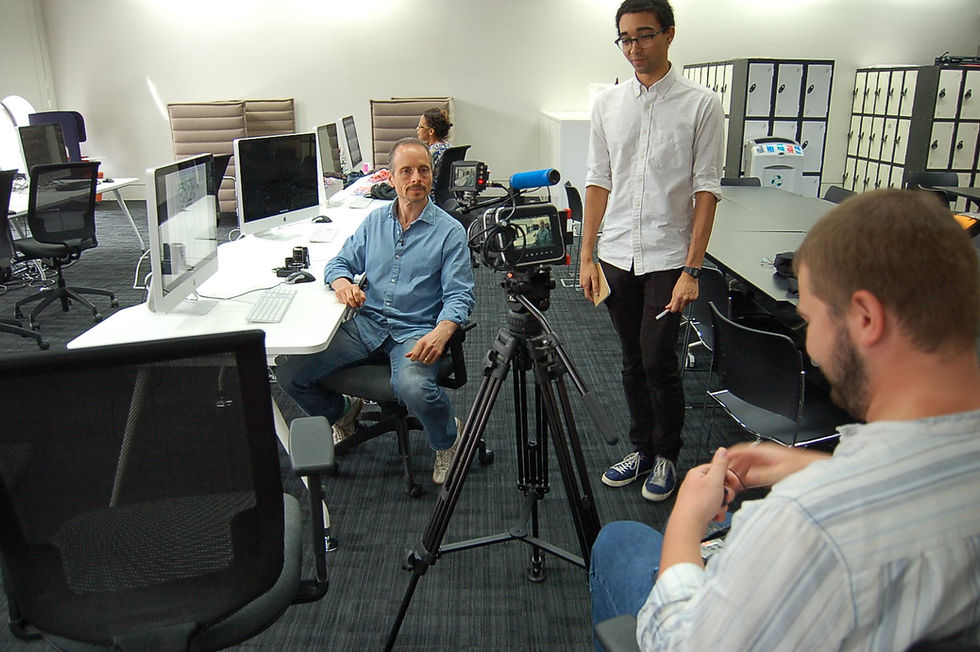
On the day of the shoot, a professional crew manages the camera operation, lighting techniques, and sound design. These technical elements have a direct impact on how long a video remains useful. Poor lighting makes a video look dated. Muddled audio makes it difficult to follow. A professional director ensures the presenter performs at their best, which means fewer retakes and a smoother edit.
Working with a production company also removes the pressure from your internal team. Your subject matter expert can focus on delivering their knowledge, while the crew handles the technical matters. This reduces the risk of a session being abandoned because of a technical fault.
Post-Production Polish
Post-production is where the footage becomes a proper training asset. The editor removes mistakes, adds supporting graphics, and ensures the timing flows well. The result is a tight, professional video that learners will trust.
This is also the stage where you add elements that make the video easier to update later. Some production partners can help you structure your content so that a single section can be replaced without re-shooting the entire video. That is valuable when a policy changes or a procedure is updated.
The MotionFish Media Project Approach
For trainers, coaches, and small businesses in London and Manchester, MotionFish Media Project offers a distinctive way to access professional video production for training. The company operates as both a video production company and a social enterprise. It specialises in creating online courses and training videos for established trainers and coaches, while employing and mentoring media graduates.
The social enterprise model matters to clients because it changes how the service is delivered. MotionFish provides affordable, high-quality production by giving talented graduates the chance to build their skills on real client work. Clients benefit from enthusiastic, up-to-date technical knowledge, and graduates gain the professional experience they need to progress.
This approach also means your training project supports the next generation of media professionals. When you choose MotionFish, you are not just buying a video. You are contributing to a sustainable model of employment and mentorship in the creative industry.
The team at MotionFish can handle the full range of training content. This includes live capture of presentations, planned tutorials, studio or green screen filming, and even AI avatar content. Whether you need a single talking head video or a complete series of online course modules, the production process is shaped around your learning goals.
How Video Cuts Costs for HR and L&D Teams
For HR and learning and development teams, the case for video production for training is often measured in staff hours. When you deliver a session live, you are paying for the facilitator's preparation time, their delivery time, and the time employees spend away from their duties.
A video moves most of that cost into the production phase. Once the video exists, the facilitation burden drops. A junior HR assistant can play the video and lead a short question session. The detailed explanation is handled by the video, which frees the senior team to focus on more strategic work.
Video also reduces the cost of training people across multiple sites and time zones. Instead of flying a trainer to three different offices, you create the video once and share it. Employees in London, Manchester, and elsewhere all receive the same high-quality training, with no travel expenses attached.
Time savings are significant too. A learner can pause a video to take notes. They can rewind to hear a complex explanation again. They can watch at a time that suits them, rather than being forced into a fixed training schedule. At the end, they may consume the same information in less time than they would in a live session, because the video has no irrelevant digressions.
Small Businesses and Independent Trainers
The benefits of video production for training are not limited to large corporations. Independent trainers and small businesses also have recurring costs that can be reduced. If you teach a public workshop or an in-company course, you will have spent many hours developing the materials.
Video lets you multiply your effort without doubling your calendar. You can sell your course as an online programme, freeing your time for one-to-one coaching or higher-value consultancy. Alternatively, you can use video to deliver the core content before a live session, so that precious workshop time is spent on practice and questions rather than lecture.
For small business owners, training video can reduce the cost of bringing new staff up to speed. You can film how to use your booking system, how to handle customer complaints, or how to follow your quality checks. When you are busy running the business, a series of short videos can answer questions for you. This is one of the most effective ways to create a repeatable training process without hiring a full-time trainer.
Video production courses teach camera operation, lighting techniques, sound design, and video editing, but that does not mean you need to become an expert in all of them. Working with a specialist like MotionFish means you get those skills as part of the service, not as something you have to learn yourself.
What Is the Best Way to Record a Training Video?
There are many ways to record a training video. You can set up a camera in your office, share your screen while you talk, or approach a production company for a studio shoot. The right answer depends on the purpose of your content and the budget you have available.
For simple screen-based software tutorials, a screen capture approach may be enough. However, for anything that represents your brand or that will be used repeatedly over several years, investing in proper production is usually worthwhile. A professional video reflects well on your organisation and is more likely to hold the learner's attention.
MotionFish can advise on the best format for your content. For some projects, live capture of a session with real participants adds authenticity. For others, a planned tutorial filmed in a studio or against a green screen gives a cleaner, more focused result. The production team helps you decide based on your learners and your budget, rather than pushing a single format.
Making the Financial Case to Your Organisation
If you need to convince a manager or finance director to fund video production for training, the argument should focus on the number of repeat sessions it will replace. Estimate how many times a particular piece of training is delivered each year. Multiply that by the cost of the trainer's time and the participants' time. That number is your current repeat delivery cost.
The production fee for a professional video will often be less than the cost of several live sessions. Once the video is in place, the marginal cost of delivering the training to an extra employee is close to zero. This is why professional video is such a strong investment.
It is also wise to consider the lifetime of the content. If a training video remains accurate for two or three years, the cost per viewing becomes very small. If you need to update a small section, a professional production company can manage that efficiently if the original project was planned with updates in mind.
Finding a Training Video Partner You Can Trust
Video production for training is not about buying equipment or learning software. It is about creating content that changes behaviour and improves performance. To achieve that, you need a partner who understands both media production and the learning process.
MotionFish Media Project combines those strengths. As a social enterprise based in London and Manchester, it offers the technical skill of a professional production company while focusing on affordability through its graduate mentoring programme. Their services cover everything from planning and scripting to studio shooting and final editing for online courses and training videos.
When you choose MotionFish, you are working with people who have a genuine interest in helping trainers and coaches extend their reach. They are not a generic production agency. They specialise in the kind of video content that teaches, explains, and demonstrates, and they understand what it takes to make a course that learners will finish.

Photo by Vitaly Gariev on Pexels
Frequently Asked Questions
Why is video production for training more cost-effective than live training?
Live training incurs a new cost every time it is delivered, including the trainer's time and the learners' absence from their roles. Video is different because you pay for the production once and then deliver it many times. The larger the audience, the lower the cost per learner, which makes it very efficient for routine training.
How long does it take to produce a professional training video?
The timeline varies depending on the complexity of the content, but a professional process always moves from pre-production to shooting and then post-production. Simple projects can be completed quickly, while larger online courses need more planning time. MotionFish advises on a realistic schedule during the planning phase.
Can a professional video be updated when my content changes?
Yes. If a policy changes or a procedure is updated, a section of the video can be re-shot or edited. The ease of updating depends on how the original video was planned and edited. A production company can keep files organised and structured to allow for targeted edits without full reshoots.
How does MotionFish Media Project keep production affordable?
MotionFish is a social enterprise that employs and mentors media graduates. This structure gives talented newcomers professional experience while helping to reduce production costs for clients. Organisations benefit from high-quality video and the knowledge that their project supports the next generation of media professionals.
Taking the step from live-only delivery to recorded training content is one of the smartest moves a trainer, coach, or learning team can make. The upfront investment in professional video production for training is quickly repaid through the time saved, the consistency gained, and the ability to reach more people without running another session. If you are ready to turn your best training session into a lasting asset, the team at MotionFish Media Project is available to discuss your project and show how their production process can help you cut your repeat delivery costs for good.


Comments